


Exit Article button
A label that reads 'Forging home, the migration issue'
Issue 02
Issue 02
The words 'In pursuit of safety'
The text 'hover' with an arrow pointing down
The words 'In pursuit of safety'

Having physical safety doesn't mean all the other safeties fall into place. This story is about the pursuits of safety – safety of the soul and safety of the self.

words BY ELLYSA
30 MIN READ
"I will be the mother this time. Who wants to be the father?” a six-year-old Sonia asked. Sonia, the first girl I ever liked. Long, curly hair, golden-brown complexion, an inch taller than me. I raised my hand eagerly.

The comment came from one of our other friends.

“But you are a girl. You should be the daughter.”

Do you remember playing house? I always wanted to be the husband or the son. But what I wanted the most at six years old was to be Sonia’s husband. I liked Sonia, but I knew I couldn’t tell anyone because it didn’t feel right.

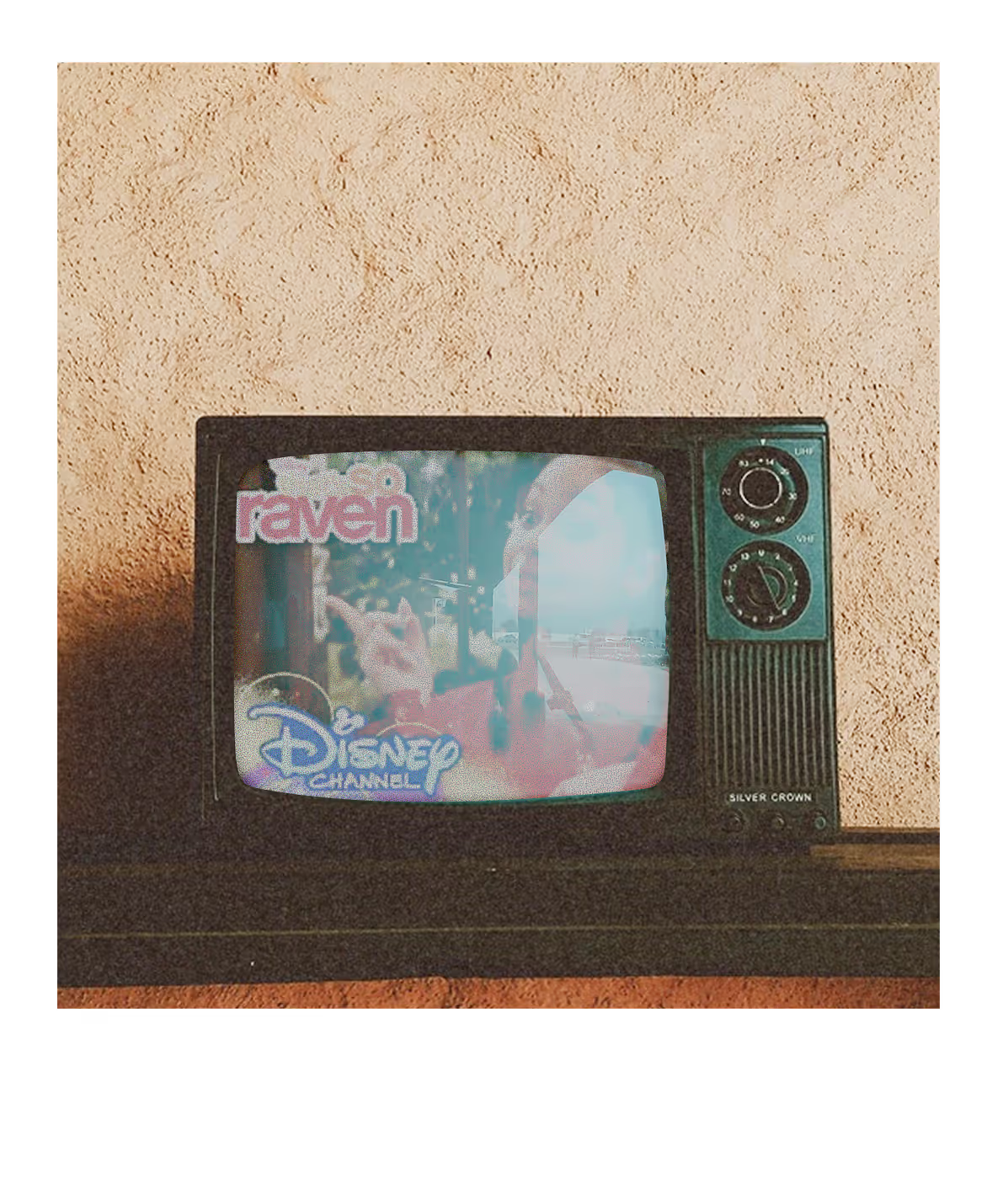
Growing up in a conservative, post-colonial country meant consuming Western media while living by Asian values. I would often rush home after school to catch the next episode of That’s So Raven and Hannah Montana. Yet during dinners, my mother always reminded me to never raise my voice to elders, always obey, and trust adults to lead you. Rebellion was for TV characters, not for me.

The rules of religion made me want to be good – not because faith is a prison, but because faith is home and home is where safety lives. This story is about my pursuit of safety. The safety of my soul and the safety of my self.

Safety from hell

Singapore has only one season – a constant tropical summer. I remember sweating through my uniform for madrasah, Islamic school, every Saturday afternoon. I remember the stale-smelling classroom in the mosque, the dark blue chairs splayed across the classroom.

“If you can’t stand Singapore’s heat, Hell will be insufferable. I don’t think anyone can withstand fire burning through our flesh or boiling water poured over your heads,” the warning echoed through the room of 15 fearful ten-year-olds.

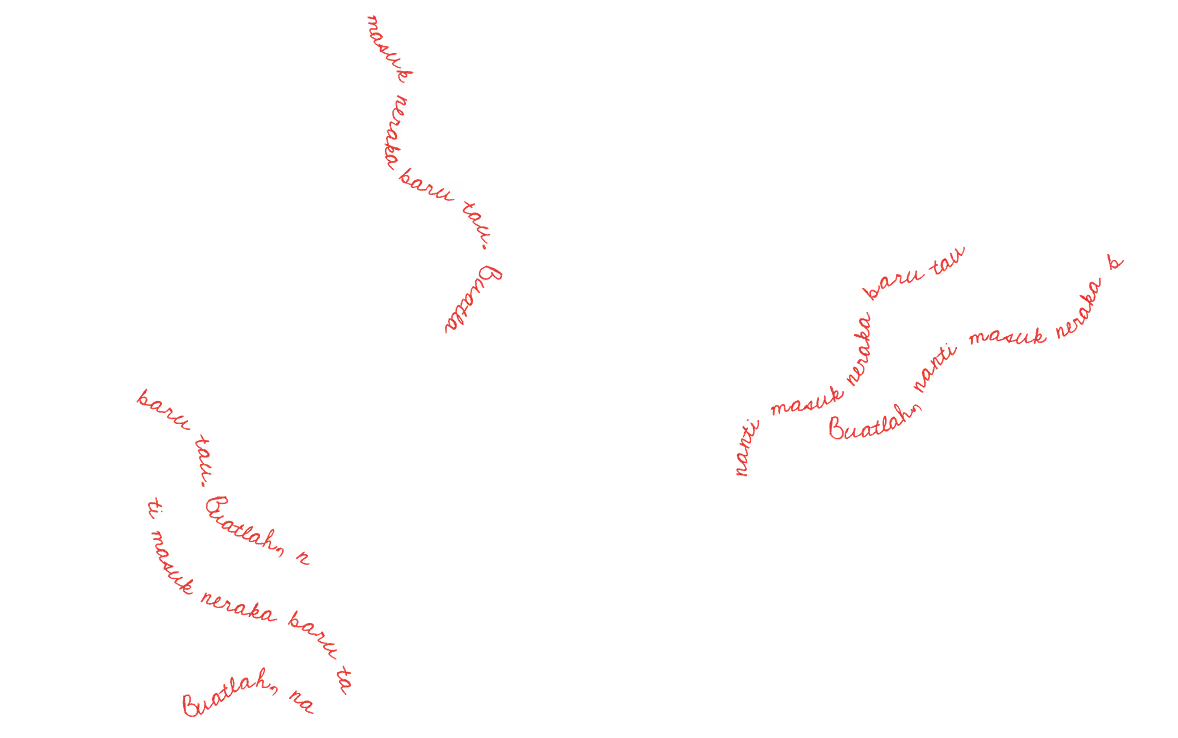
Like most cultures, we cultivated a list of sayings we often heard from our elders and one that stuck with me was Buatlah, nanti masuk neraka baru tau. Feel free to do it again, and you will enter Hell.

Singapore's strict system meant constant fear-mongering from all forms of authority: parents, teachers, God.

Buatlah, nanti masuk neraka baru tau.

The threat was simple: misbehave and you'll burn. So, I learned to be good. I prayed every day. I memorised my surahs. I fasted during Ramadan and followed every rule they gave me.

I tried my best and yet, there was one thing I couldn't pray away: I wanted to love a girl. I wanted to be allowed to love a girl. Logically, being a boy was the solution. I wanted to be a boy, not because of dysphoria but because I thought that would be the answer to my wishes. Boys are allowed to be with girls and this would make it all halal.

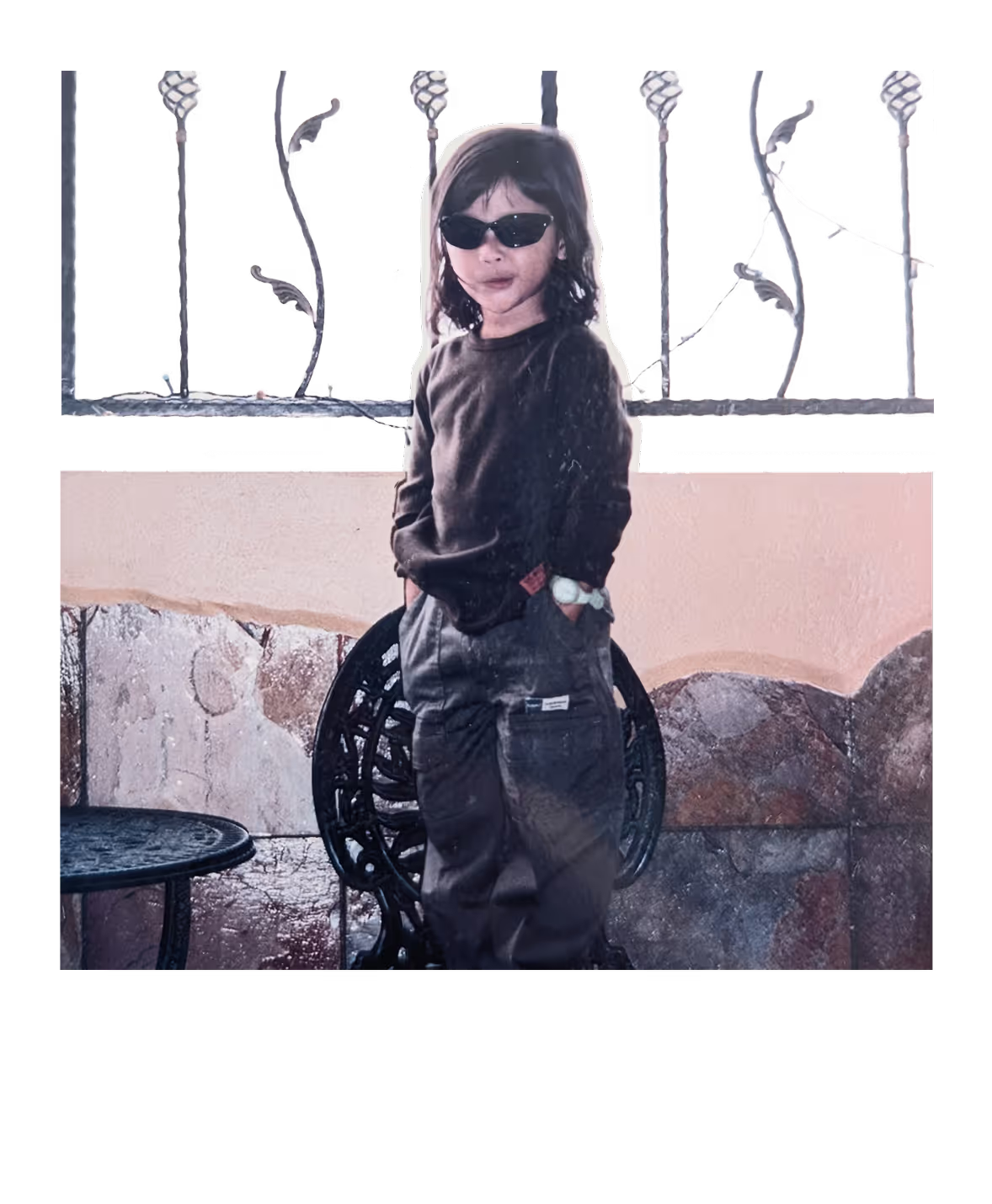
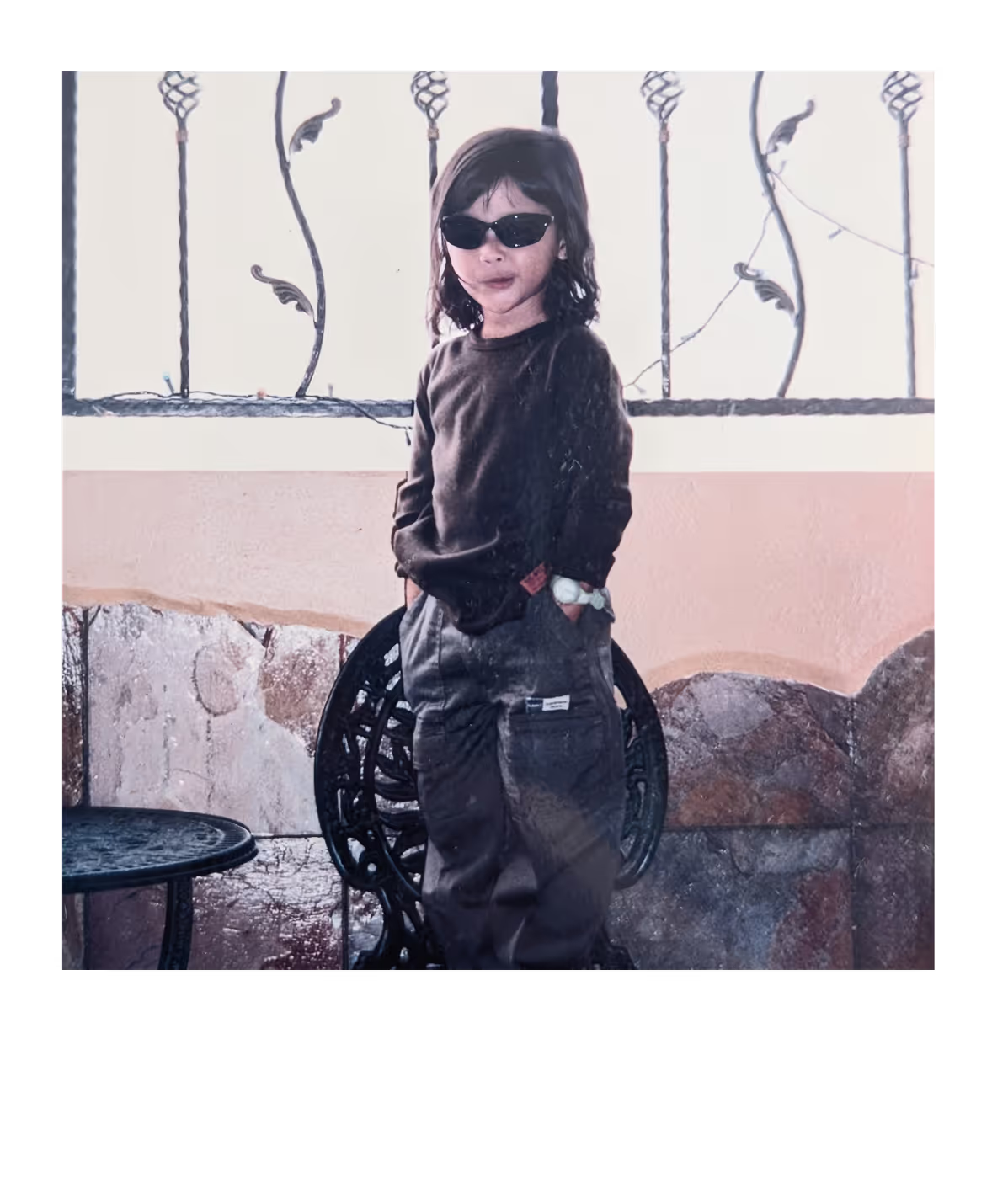
So I was the tomboy – cargo pants, Oakley glasses, trying desperately to become what I thought I needed to be. I didn’t know what to do. I had no-one to ask for help and was too young to even explain what I was going through. I waited to grow up, hoping the feelings would disappear.

Instead, things only got more complicated when I started secondary school. While everyone was talking about their first boyfriend or girlfriend, I knew I was the only one who felt the way I did. Until Sarah* – my first girlfriend. I remember rejoicing that I could finally experience love like they do in the movies. We would walk past each other and let the back of our hands touch for a millisecond – that rush, the electrifying thrill of secret puppy love. For the first time, holding a girl’s hand was not just a fantasy. It wasn't a Habbo Hotel avatar or an MSN screen name I had to log out of at the end of the night. She was real.

It was perfect – and yet, it was terrifying. Because every single time we cuddled, I could hear my madrasah teacher’s voice: “Hell will be insufferable. You will feel the burning heat through your flesh...”

Nightmares of Judgement Day consumed me: tsunamis, collapsing buildings, hellfire. I woke in cold sweats, crying. I refuse to die a painful death. I am scared that I will die a painful death.

Panic attacks followed. Waves crashing in my head, Judgement Day horns ringing in my ears. I forgot to breathe, self-suffocating while chaos grew louder. My demeanour changed. My prayers changed.

“Ya Allah (Oh God), why was I born this way? If the actions, because of the person I am, will bring me to Hell, what is the point of living?” The tears welled up. I clenched my fists and continued: “I don’t want to like girls anymore. I do not wish to die a painful death and continue that pain through Hell. I can’t do this anymore. I am begging desperately. Please change me.”

Was she worth the damnation? The answer that had always been yes turned to no.

There was no other way. She was not worth Hell. To please God, I had to erase myself. That was my safe answer. How could I love when it would only bring me pain in the afterlife?

I prayed the same prayer every night until I was 22.

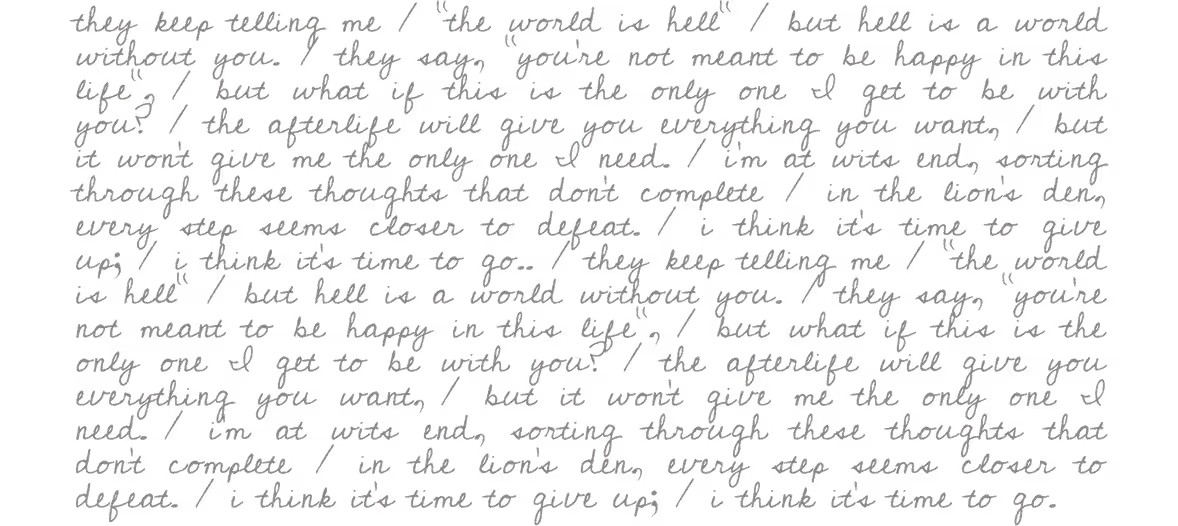
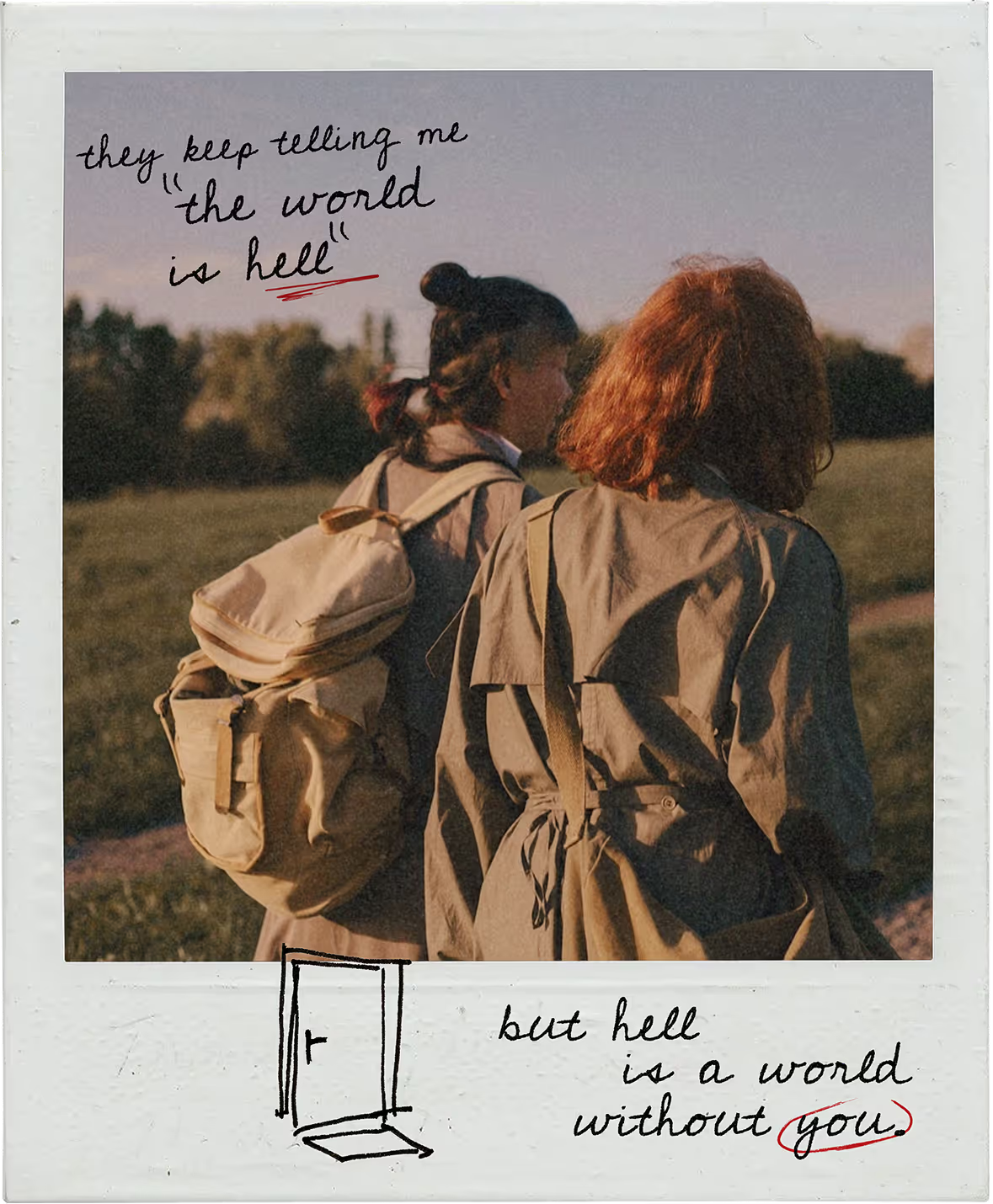
they keep telling me
“the world is hell”
but hell is a world without you.
they say, “you’re not meant to be happy in this life”,
but what if this is the only one I get to be with you?
the afterlife will give you everything you want,
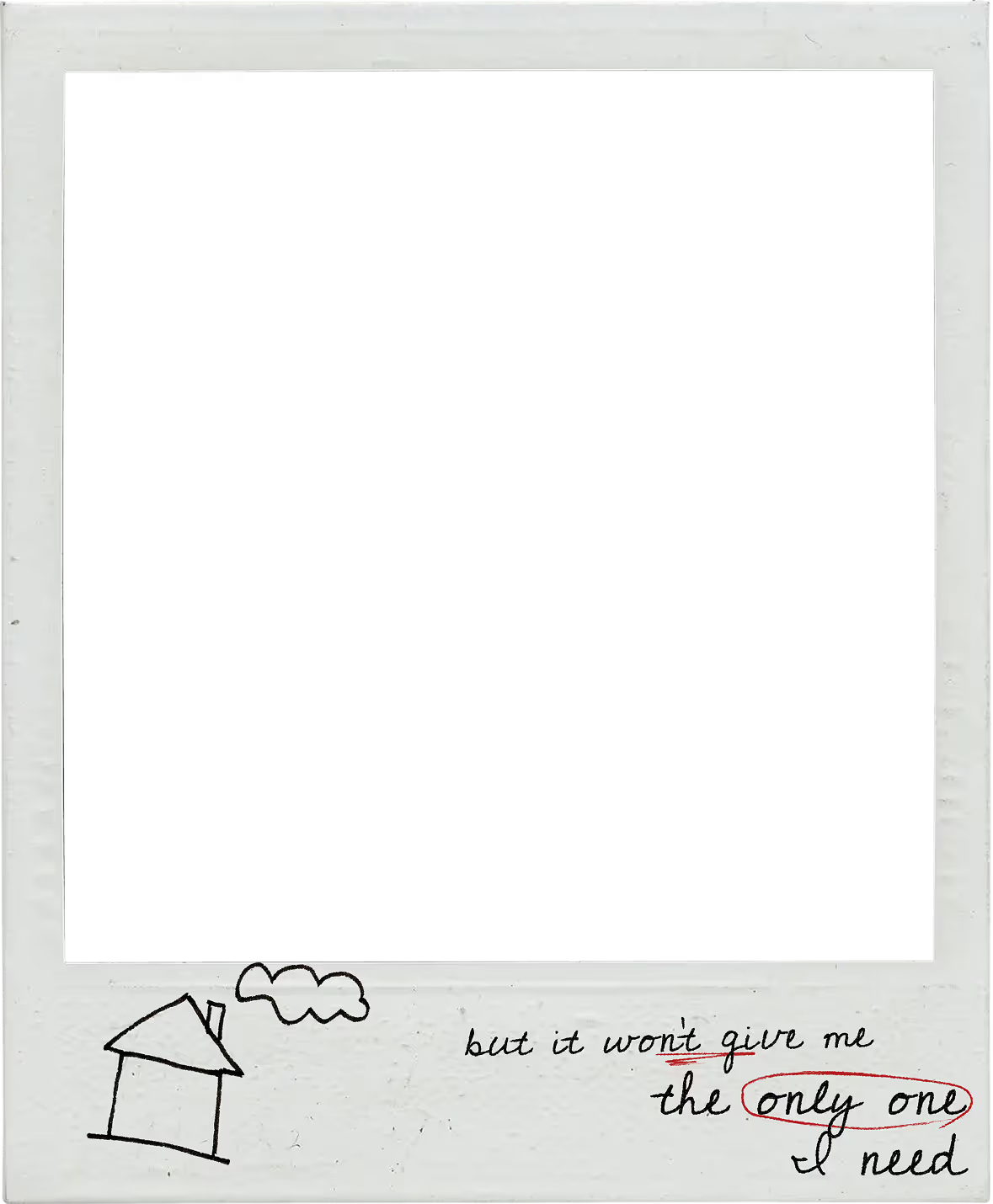
but it won’t give me the only one I need.
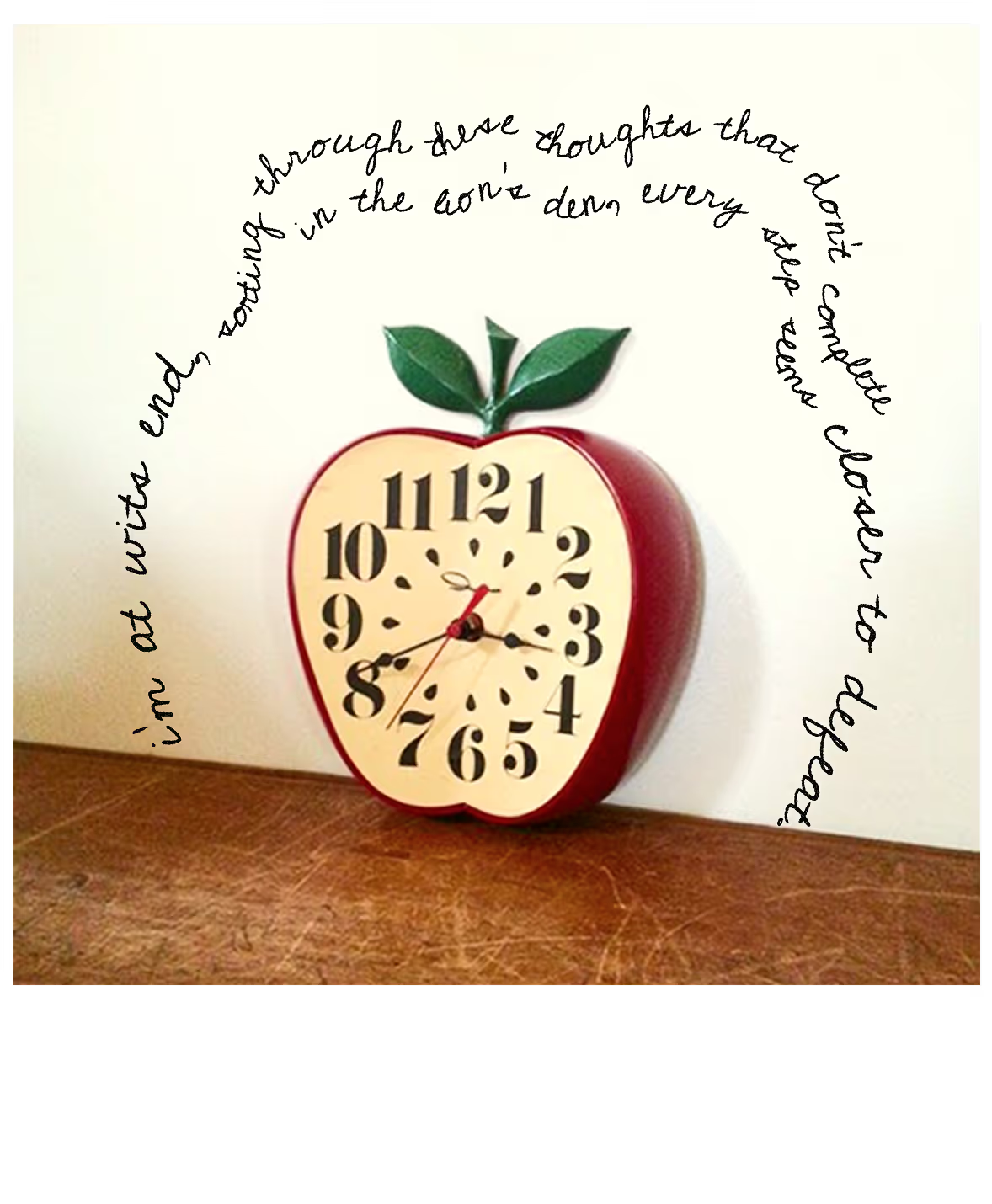
i’m at wits end, sorting through these thoughts that don’t complete
in the lion’s den, every step seems closer to defeat.
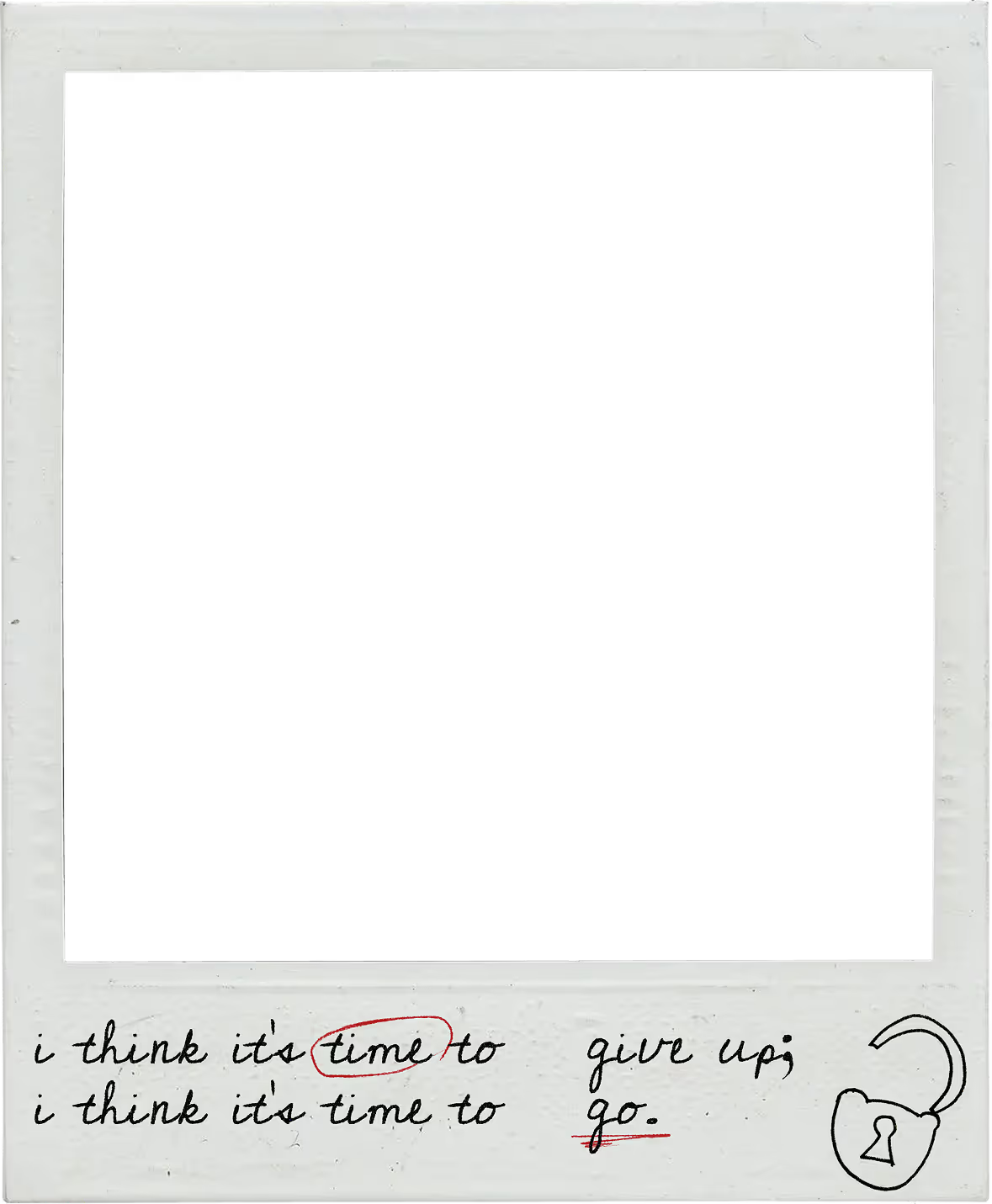
i think it’s time to give up;
i think it’s time to go.

Safety of the self

For the next seven years, I tried to conceal my feelings. I tried liking boys, wore dresses, and kept telling myself: “You’re doing well.”

Some days I convinced myself the prayers were working. Most days I hid under my blankets after prayers, wondering how many more years I could survive.

The silence was deafening. Calling out for help seemed impossible, for fear that I would be punished, fear that my panic attacks and nightmares would return. I accepted that this was how I was going to live – locked in a closet I'd built myself, with chains I'd tied and a combination only God knew. I could never get out. But at least I'd be free from hellfire, safe from ruining my family. That was what I felt – until I met her.

Kristina, the American girl who came to Singapore. She reminded me of the girls in the shows I grew up watching – free, unapologetically herself. She was everything I'd spent seven years trying not to be. She was the girl of my dreams. Unlike stolen hand grazes, Kristina wasn’t ashamed to be seen with me. She celebrated our feelings for one another.

"I accepted that this was how I was going to live – locked in a closet I'd built myself, with chains I'd tied and a combination only God knew."


It was her words that changed everything: "I love you for who you are."

Those words opened the door I'd kept locked for years. Kristina saw all of me: the guilt that drowned me, the continuous prayers to distance myself from Hell. And yet, she stayed. I knew what emotional safety felt like for the first time after 22 years. It was revolutionary. But Kristina also saw how the fear still lived in me. One night while we were lying in my childhood bedroom, she whispered: "Why is homosexuality haram (forbidden)?"

I didn't have an answer. I'd asked the same question since I was seven, and the only response: “It's in the Quran."

"When we leave," she said quietly, "when we're finally free, let's find the real answers together. You don't have to carry this fear forever."

The fear of being seen was constant in a country you could cross in forty minutes. I wanted to hold her hand in public. I could never fully enjoy dates because I was always scanning the crowds for familiar faces. 

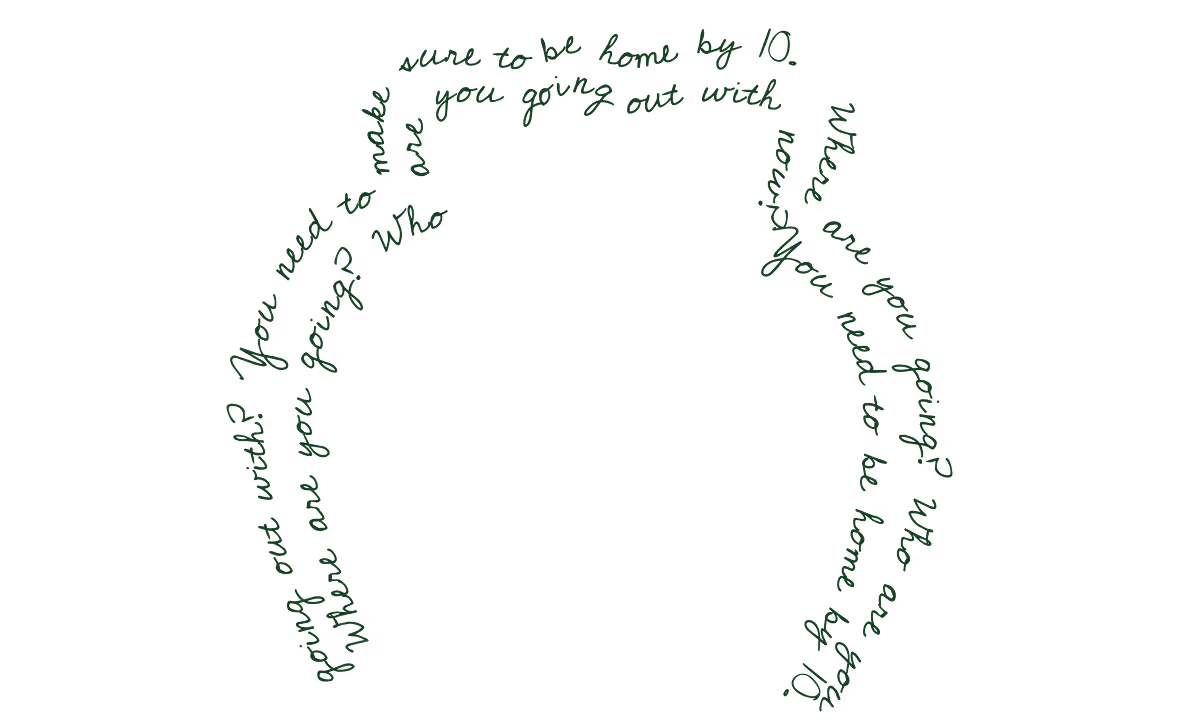
At home, the questions never stopped. "Where are you going?" "Who are you going out with?" "You need to be home by 10." My mother's voice, always slightly raised, as if volume could extract the truth. I was twenty-three, twenty-four, twenty-five – a grown woman justifying every late night, every weekend plan. 

I learnt to lie through words and the movements of my body: relaxed shoulders, steady eye contact, the right amount of irritation to seem like a daughter with nothing to hide. Kristina was a friend. Dinners were work events. Each lie protected them as much as it protected me. In a collectivist culture, sometimes nothing stays private. The community talks and, at times, is a bit too quick to judge. I knew my parents couldn't face that shame: the whispers, the sidelong glances, the pity dressed as concern. So I carried their honour for them, even when the weight made it hard to breathe.

Kristina couldn't understand why I didn't just leave. "They hurt you," she said once, frustrated after another cancelled plan. "Why do you keep protecting them?"

I didn't know how to explain. Yes, they hurt me – the remarks, the control, the way they looked through the person I actually was. But they were still my family. I had learnt to love them because they were my blood, and that loyalty doesn't unlace easily. We are taught to forgive family, always. Whatever they do, you forgive, because they are yours and you are theirs.

And beneath the loyalty, there was something else: I was taught that heaven lies at the sole of my mother's feet. If I cut her off, what was my path to Jannah? I had already risked hell by loving women. Could I risk it further by abandoning her?

Kristina’s parents came to visit Singapore seven months into our relationship. I wasn’t even sure how to address them at first; the usual respectful ‘Aunty’ and ‘Uncle’ didn’t seem to fit. Meeting them the first time, I couldn’t know that I would eventually call them ‘Mom’ and ‘Dad’. Kristina’s parents treated me like one of their own, and loved me because of who I was, not in spite of it. They had photos of Kristina and me on their fridge. For the first time in my life, I sat at a family table as myself, my whole self, and no one flinched. No one made me feel small. 

They made me realise there was a reality that exists where parents could love their queer children, welcome their partners wholeheartedly, and co-exist in the same space without shame. My parents could have done this for me too. And their choice of denial and shame instead hurt me more than any religious teaching ever had. 

But the truth is, I still wanted what they couldn't give me. I still craved a parental figure who could see me fully and say yes, you are mine, exactly as you are. That hunger kept me tethered, kept me returning to a table where I had to hide.

Eventually, the strain of lying and hiding wore on both of us. Kristina was patient, but Singapore’s environment wore her down.The relationship was split in two: the private us, who were beautiful and whole, and the public us, who did not exist.
Eventually, we knew it was time to go.

We decided on Melbourne. Kristina called it ‘America-lite’. Visa pathways, queer community, distance. For the first time, leaving did not feel like I was running away: it felt like I was running towards something. 

Some days I would search for jobs in Melbourne, imagine the life waiting for me – and then guilt would flood in, hot and heavy. I was excited and ashamed of my excitement. I wished it could be simple. I wished I could stay and still be myself. But that was never one of my options. 

When I told my family I was leaving for Melbourne, there were disagreements. I was the baby of the family, and it was a hard pill to swallow. My sister asked: “Who will take care of Mama and Baba?” as if I were an only child. I wavered. My sister was married, twenty minutes away but occupied with her own family – a husband, children, a life that left little room for our parents. I thought of my mother alone in the house. I thought of my aunties and their daughters who stayed, who fulfilled something I was about to abandon. I had seen what loyal daughters looked like. I was not going to be one of them. 

For a moment, I forgot the strict rules, the backhanded remarks and pain I carried my whole life. I thought of devouring beef rendang and singing Suasana Di Hari Raya with my cousins during Eid as we visited ten different houses in a day. Memories of family gatherings played in my mind, of gambling five cents for a round of Blackjack, laughing until my sides hurt as we impersonated our parents. The pain and the love had grown together, tangled so tightly that I couldn’t pull one out without disturbing the other. 

Kristina reminded me: “You're allowed to choose yourself. Just this once.” 

I did. I stood my ground. I told my mother that I was not seeking her permission but I would love her blessing. I told them it was about independence and experiencing life in a different country. It was not the right time to tell them the real reason. 

They thought it was temporary. A few years for study, then I'd come home. They knew Kristina – she'd been to the house, shared meals at our table. My ‘best friend’. The one I was conveniently moving to Melbourne with, conveniently living with, conveniently building a life with. Best friends. Housemates. Nothing more.

The moment the plane touched down, my mind began racing. No curfew. No micromanaging. I could introduce Kristina as my girlfriend.  

For the first time, my internal and external selves could exist in the same room. I felt like distance had saved me.

The unfinished pursuit

In Melbourne, Kristina kept her promise. We finally had space to question: “Why is homosexuality haram?” “Why do you pray five times a day?” I didn’t have the answers.

Kristina proposed that we learn about Islam together – separating faith from fear. I loved that she wanted to understand. For the first time, I wasn’t alone in questioning. 

We started taking accredited online courses. I read Homosexuality in Islam by Scott Alan Kugle, Hijab Butch Blues by Lamya H and many others – scholarly reads and stories that spoke about the experience of other queer Muslims. I explored different perspectives, talked with Muslims in places other than Singapore. I leaned toward progressive scholars, interpreting the Quran for modern contexts. 

I read, I studied, I reached out to others like me. My fear of Hell decreased. Not because I stopped believing, but because I knew God wasn’t waiting to punish me. The shame was filtered through culture, not divine mandate. 

But relearning Islam also meant that I had to unlearn Islam. I realised that what I had learned as a child was tinged by colonisation, patriarchy, and strict Asian values. Unlearning something is like being told the lullaby your mother sang you every night was actually a warning – the comfort you drew from it was real, but the meaning was something else entirely. 

My family now knows, and refuses to accept. So I bring my ‘straight’ self to family gatherings. While Melbourne lets me be whole, Singapore demands I pretend by cultural-societal standards. Yearly visits spike my anxiety – each casual remark about visiting my Melbourne home threatens the only space where I don't have to hide.

"...freedom and grief
co-exist in the same breath."

"...freedom and grief co-exist in the same breath."

Some days I wish they’d disown me, but that wanting itself is sinful. Even my anger is haram. In Melbourne, I can hold hands, attend queer events, exist without calculating every glance.  But having physical safety doesn't mean all the other safeties fall into place. I miss my mother tongue – the ease of slipping into Malay without thinking, without translating myself. Here, I pass strangers sometimes who speak it, and for a moment I feel like I exist fully, in a language that knows me. But those moments are rare.

I think of small things. My mother patting me to sleep, her hand gentle on my back, rhythmic and sure. Whenever she stopped, I would nudge her with my legs – more – and she would continue, no questions, no impatience, until I drifted off. No hiding. Just her daughter. Just that quiet love. I gained the freedom to exist as myself, but lost family belonging, cultural home, uncomplicated love.

I am slowly finding others like me. Queer Muslims who are unlearning. Diaspora kids who understand the weight of family honour. People who understand why “just cut them off” isn’t simple, why freedom and grief coexist in the same breath.

I disassociate the word ‘religion’ from Islam itself. I have my own relationship with Allah – not with ‘religion’, but with faith itself. Going to Hell does not scare me like it used to.

My dreams have shifted from Judgement Day to building a home with the people I love. Maybe a family of my own one day. A place where I don’t hide. In these dreams, I find a new kind of safety.

But I am not there yet. Melbourne lets me be whole, but it does not let me stay easily. I am always proving, always renewing, always uncertain. And Singapore, I cannot return to a family that only loves the convenient parts of me. The version of their daughter who is palatable. The version who doesn't exist.

I wanted a home I could leave and come back to. Instead, I have two half-homes: one where I can be myself but cannot settle, one where I could settle but cannot be myself.

This is the pursuit that has no ending. Not yet. I am still looking for a place where I can stop running – where I am whole, and wanted, and allowed to stay.

*Names have been changed.
Ellysa
Ellysa is a proud queer Muslim advocate passionate about the intersection of faith, sexuality, and mental health. Having moved from Singapore to Melbourne during the pandemic era, she brings a unique perspective on navigating cultural identity, familial dynamics, and the complexities of self-acceptance within diverse communities.

*Name has been changed.