B: What's your earliest memory of creative expression?
S: That's such a good question. There're a few memories that happen simultaneously. I remember my grandma would get me to draw pictures of her and I would make her look really beautiful.
And then I’d make my grandad look really ugly (laughs). But that was her direction. And then she'd go to show him, like: “Look how she drew you. Look how she drew me.” She encouraged that artistic expression to draw things.
And then I also remember for the prep yearbook, the smartest kid in the class wrote a little essay about a carnival that he went to and they got me to do the drawings for that. They said to draw a ferris wheel and I didn't know what that was, so I basically drew a ferris wheel based on how they explained it to me.
B: And what’s your earliest memory of using creativity for self-expression?
S: I can't, like, pinpoint an actual moment where it was. In my 20s, I guess. After the Beirut blast, I made a
t-shirt design to help raise money for Lebanon. That was the first form of art I made with activism tied to it.
B: It sounds like your earliest memories of creativity start with illustration. How did you find embroidery as a creative practice?
S: So, I never really had an interest in embroidery or even textiles growing up. I’ve always loved art, but then my parents and my teachers were like: “You don't make money as an artist, blah, blah, blah.” So I was like – oh, I’ll study architecture because that's like a very practical art form.
I did that for a year and a half, but I was missing that tactility of actually making things. I get to design things, I can make scale models, but when do I actually get to make real buildings? So I ended up dropping out. I enrolled in a short pottery course, a woodworking course, a sewing course and then got a certificate in carpentry and joinery. I just wanted to use my hands for a tactile practice.
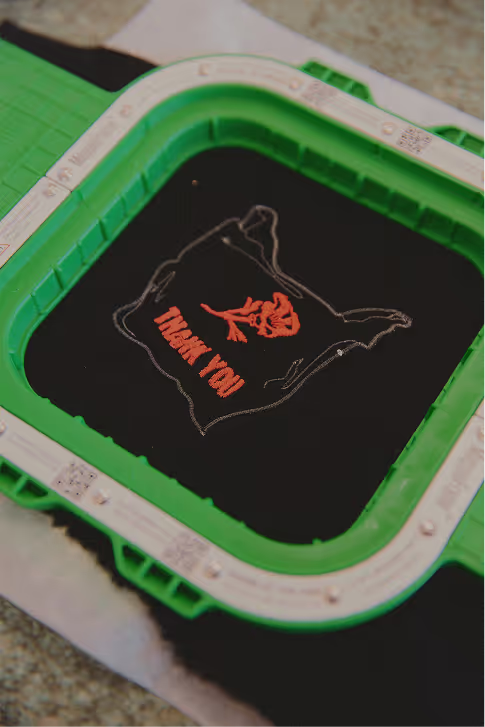
I loved the carpentry, especially. I still think about it because it was really therapeutic. But I didn’t want to work in a male dominated field. So then I thought fashion was a nice way to tie together design and construction. I ended up enrolling in a fashion design degree. And that's when I got introduced to the industrial embroidery machine. That literally wasn't until my last semester because it was being serviced for most of my degree. The first time I did it, my mind was blown because it's like drawing but with stitches. I enrolled in the Honours course just to keep on using the embroidery machine and drop out by the census date (laughs).
.avif)
B: You’ve previously described embroidery as ‘tattoos for your clothes’. What do you mean when you say this?
S: It wasn’t something I thought of myself. When I first started offering custom embroidery as a service, people just kept likening it to getting a tattoo. And then when I did a collaboration with tattoo artist
@callmebyabyss, she was like: “You know, these are both practices with needles.”
B: Is that why you started your flash embroidery?
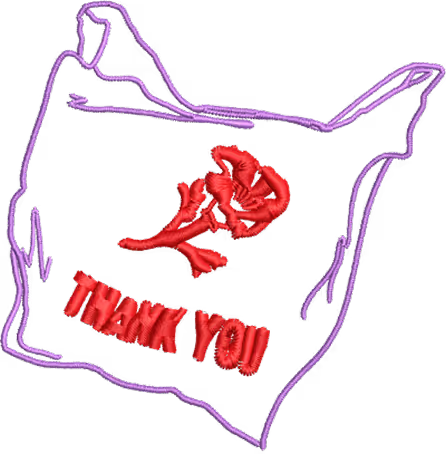
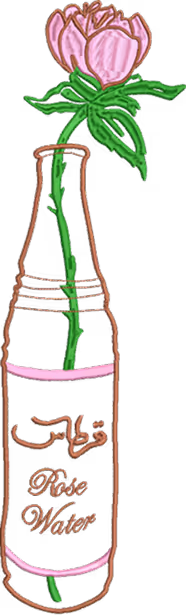
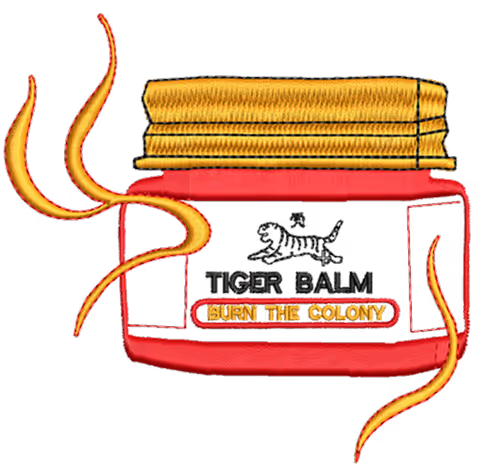
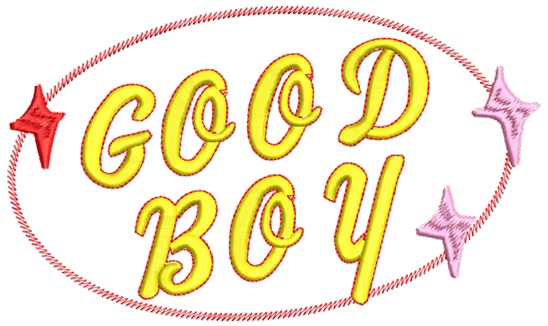
S: Yeah, the concept of the flash design came from tattoos. With flash tattoos, sometimes you get it once and that’s it. But other places do repeatable flashes. I was exhausted from digitising one design, the back and forth with someone to get that design perfect, and then to just put it on one garment and then that's it. With the flashes, I get to make new things where I feel like the designs are tried and tested so I know how they perform on different garments and it’s just a more economical, efficient way to do embroidery.
B: And I guess when you work off commissions, you’re often creating pieces that someone’s been pretty prescriptive about. Versus with your flashes, you obviously design them yourself. What’s that process like?
Yes, 100%. When I was doing custom work, I felt I became a service as opposed to a collaborator. But the ones that I get to design feel like a form of self-expression. I get to be political with the work that I do as well, which is so nice. So I feel like I get the best of all worlds where I get to get paid to do this, I get to express myself, and I get to put messages out there as well and have people wear that on their clothes.
And even though the designs are repeatable, people bring in their own garments. So each design looks different – different garments, different thread colourways, different placements. It changes what the actual design is and people apply their own meanings to it.
"... it's originally a poem about the whistle of the nightingale... But then I found out that during Israel’s current assault and ongoing genocide in Palestine, the Nightingale can’t be heard anymore."
B: What are some of your favourite designs?
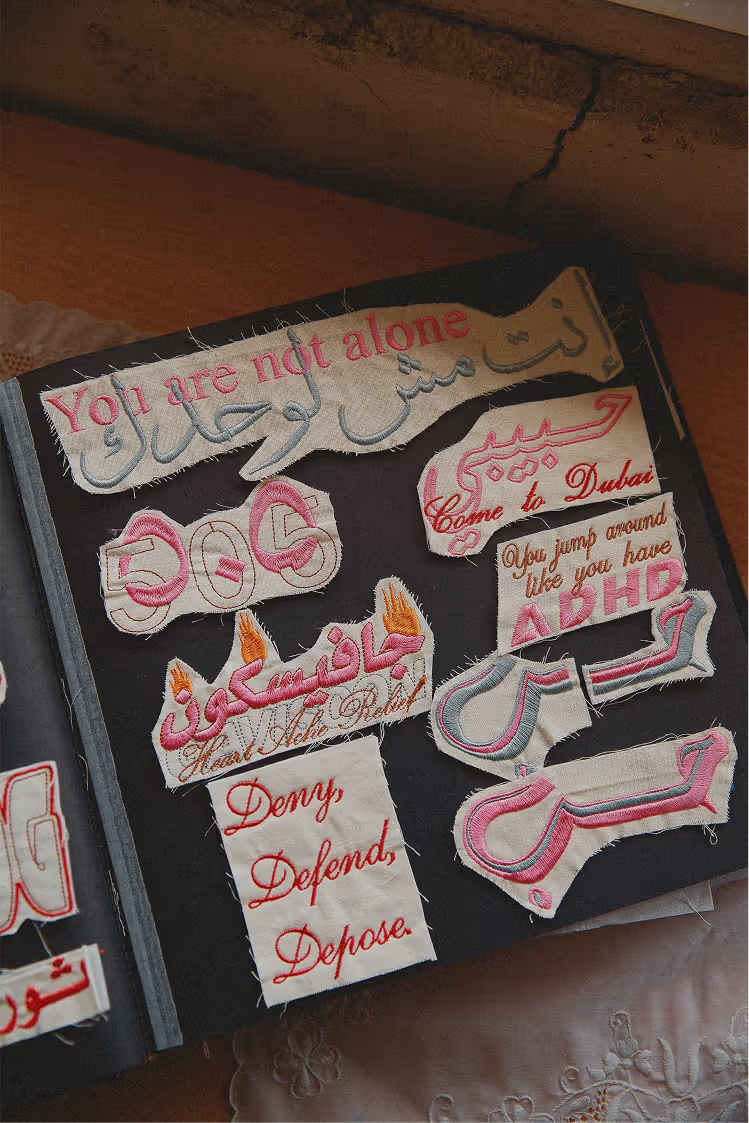
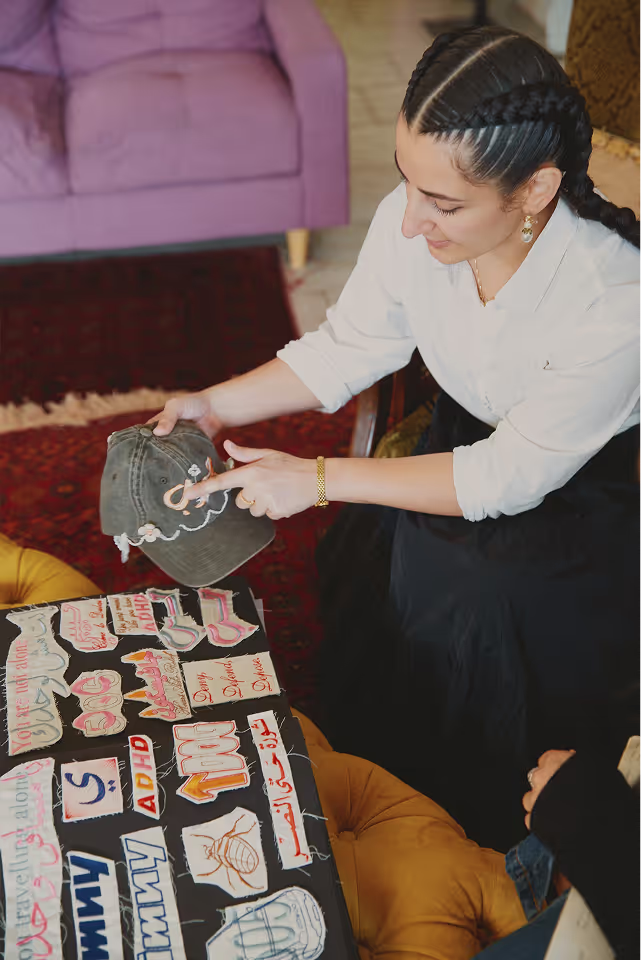
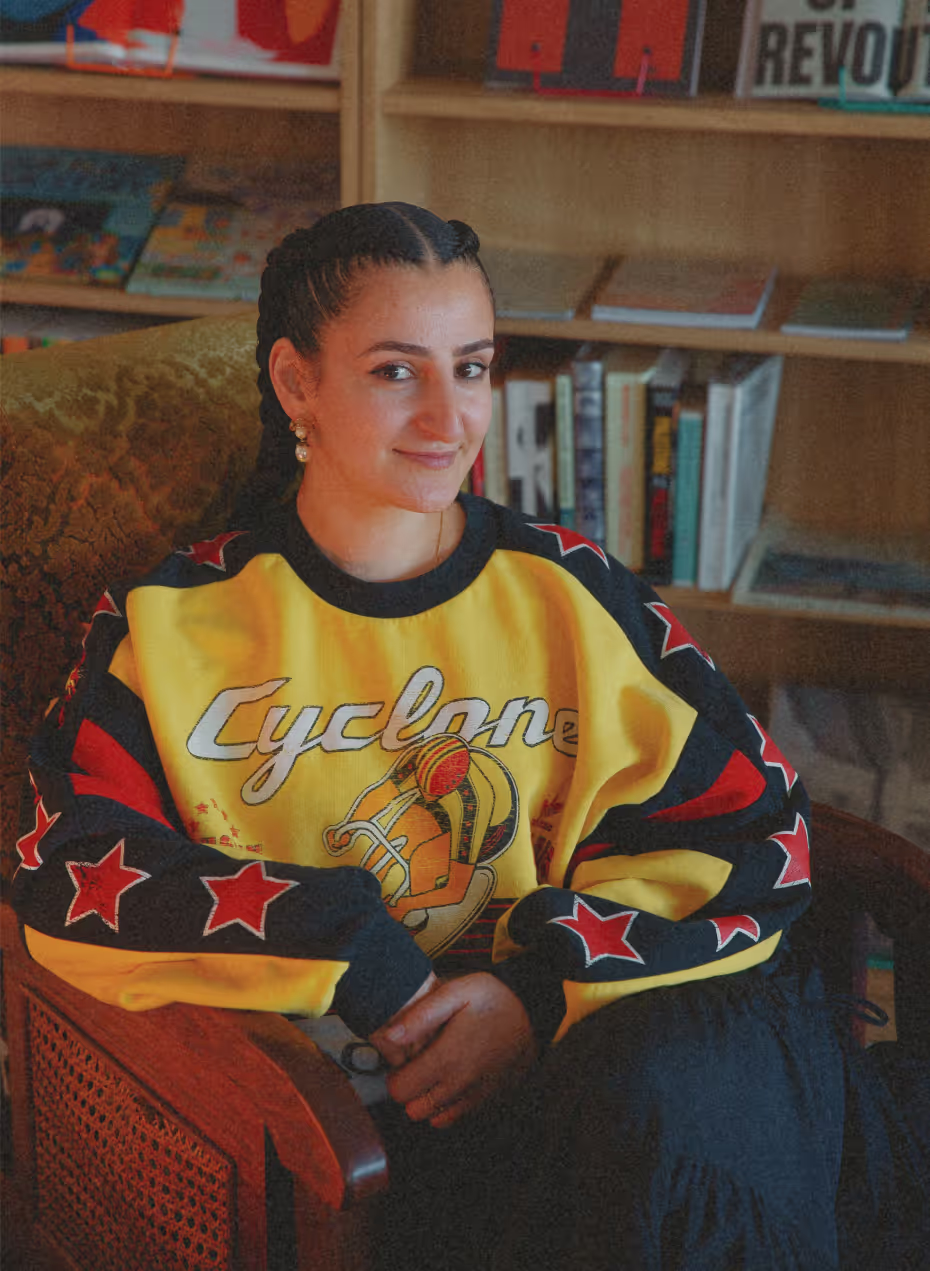
S: Let me grab my book! My sister put these together for me. The first flash actually starts over here. You can see how they get better (laughs).
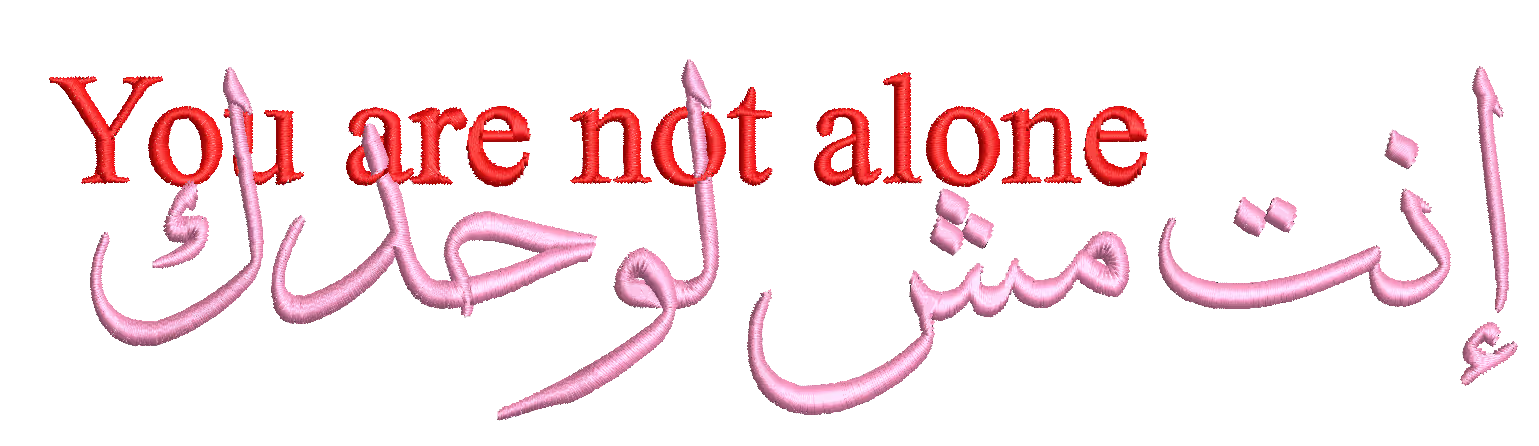
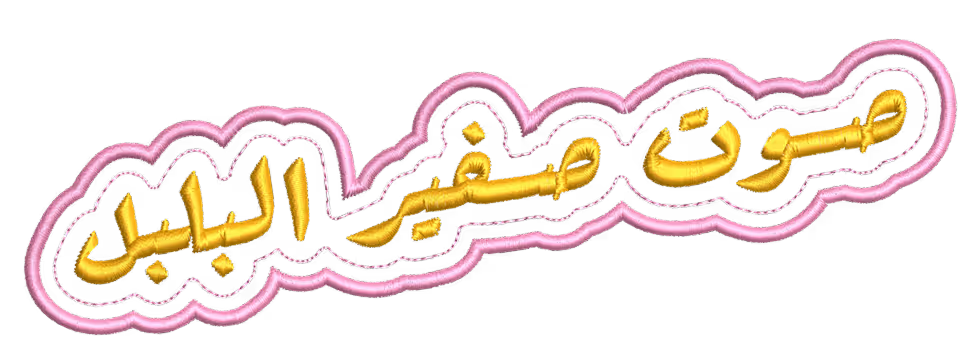
This first series – I wasn’t actually thinking about a theme specifically, but yet it ended up being about love and war. That says صوت صفير البلبل (Sawt Safir al-Bulbul), which is like a meme. It’s like the Arab version of the Rickroll when you’re watching a video and you’re invested and you want to see what happens, and then they start playing this song. But it’s originally a poem about the whistle of the nightingale – mums would send it in WhatsApp to say good morning and this music would be playing in the background. It got meme-ified. But then I found out that during Israel’s current assault and ongoing genocide in Palestine, the Nightingale can’t be heard anymore.
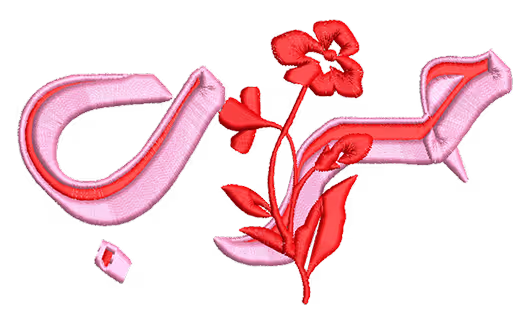
These ones here are probably one of my most popular designs. The Arabic word for war is حرب (harb) and the Arabic word for love is حب (hubb), and if you can see, the difference is just that middle letter. The flower is meant to be obscuring that middle letter to make it love.
B: Especially in this first series but even throughout your other works, the Arabic language seems to be a way that you’ve wanted to express yourself through. What has been your relationship with the Arabic language throughout your life?
S: The Arabic language is something I've always been drawn to. When my older sister first started school, her teacher told my mum: “Your daughter's not speaking English in class,” and because of that, my parents stopped speaking to us in Arabic at home. So up until I was 12 or 13, I always didn't want to be seen as Arab and was happy that I didn't have to speak it. And then my grandmother's uncle was visiting from Lebanon. He was a politician there and we had this huge party for him. I was given little Lebanese flags and it was just the first time that I felt kind of proud to be Lebanese. Because before that, I kind of associated it with the Lebanese boys in my class, and I didn’t want to be like those kids, like, “I'm different, I'm Australian,” or something like that.
I started trying to learn more about the language. I took it upon myself to do one-on-one tutoring online with a Syrian-Lebanese living in Lebanon. I learned about the language, the logic of the language was just so fascinating to me. And then the graphic element of it as well – it's so different to the English language or just Latin text. Like, there're no capitals, and then you have things like some letters that just never connect. Selfish letters, that's what they’re called. Like with the word حرب (harb), there’s a gap in between. Which is why when I showed my dad this Love/War design, he was like: “You can’t do it like that because it doesn’t join,” and I was like: “I know, this is conceptual, you need to use your imagination” (laughs).
"The Arabic word for war is حرب (harb) and the Arabic word for love is حب (hubb), and if you can see, the difference is just that middle letter."
B: It seems you really like being clever and almost making puns with language and letters in your work.
S: Yes! I only recently got into cryptic crosswords (laughs), but I like the feeling you get when you can decipher something. It’s so fun.
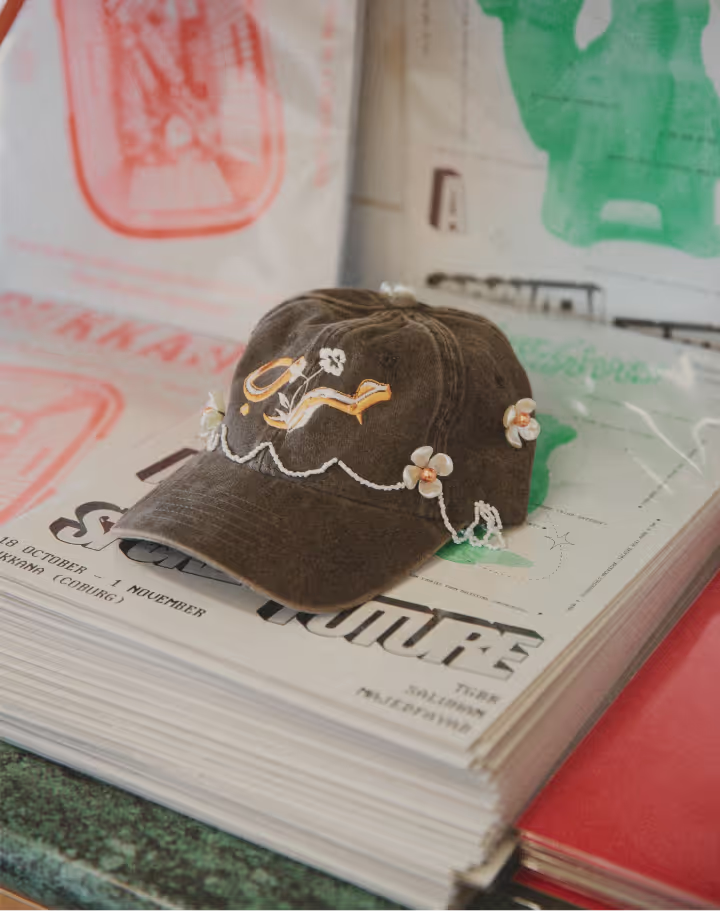
I’ll show you another design that I’ve only done on hats. This is على راسي (Alarasi), which means ‘On my head’. So it makes sense to wear on your head, but it's also a really beautiful phrase that you say when someone says “thank you”, you can say “it’s my honour” but it’s literally “on my head”. It’s a phrase I use a lot and it’s one of the very first hat designs that I did. People who use this phrase often will say “I love this hat so much”.
B: This playful joy and almost, like, cheekiness you bring to your work – it’s really fascinating to have that side by side with your political messages of resistance. Is this your way of not being too tied to one creative identity?
S: Yeah, I guess so. I think I used to be a lot more tongue in cheek with the design. But then I would be, like, embarrassed to wear a design that I made to the Lebanese bakery. I’m like: “Oh, they're going to say something.”
I have this one. There’s شمال (shimal), which is left, and then there’s يمين (yamīn), which is right. It’s this chant that goes شمال يمين (shimal, yamīn, kosom israel). It rhymes in Arabic, but it’s – left, right, fuck Israel. People would get the ‘left’ on the left, the ‘right’ on the right, and then ‘fuck Israel’ in the middle.
It was my partner Youssef who would be like: “You don't want to be attached to that. Like you don't want to have “Fuck Israel” attached to you. You'll regret it in the future.” And it's not the politicalness, it's the language. Because the actual word for ‘fuck’ in Arabic is like ‘the mother’s pussy’, it’s very vulgar.
.avif)
"We've been blessed to have this space, so it's just being able to give back to the community."
B: Yes! I find that when people don’t speak your language, the first thing they ask you (especially when you’re younger) is how to swear in that language. And I remember people being like “How do you say ‘fuck ’ in Mandarin” and I’m like “I am not going to tell you. If you said that in China … it’s just not the same as saying ‘fuck’ here.”
Do you find that your work appeals most to second or third generation kids who can understand the two cultures that you draw from and intersect?
S: Honestly, it's been quite diverse. I’ve had people who live in Lebanon or grew up there come here and they still resonate with it. And that's when my imposter syndrome comes out (laughs). But then they validate my experiences and think it’s great.
And then I get people who don’t speak Arabic at all but want to connect with it. For nearly all my designs, I am happy for non-Arabic speakers to wear the designs. Especially because the process is that they come in and engage with someone who is an Arab, and support me. The most satisfying thing is hearing someone else explain or be able to retell the story of my work to someone else. It strikes me that the people who support me and buy my work have some kind of connection to the work, whether it is like from a language perspective or it is about what I stand for.
B: You explore so many layers of resistance in your work from content to practice. Tell us a bit about how embroidery in itself is a form of resistance for you.
S: Before I went to fashion school, I liked fashion and I was shopping every week. And then I started studying fashion and I stopped shopping. It made me quite knowledgeable about what happens in the industry. The longer I studied, the worse I found the fashion world. It's a cyclical thing where you constantly need to bring out something new. Oh actually, I brought with me a t-shirt that has a little essay on the back about why I'm quitting fast fashion.
In the beginning, I was so staunch and I think I was very tough on the consumer – like, it’s your responsibility to not be buying fast fashion. But over time, I realised big corporations should be held accountable. Now I’m a bit more reasonable. I think it’s good if people can give new life to things that already exist, but I’m not going to force you to do anything.
I want to produce patches because everyone’s always asking for them, but the process is so different to embroidery I’ve had to speak to manufacturers, but it’s hard because I’m always trying to avoid things that have human labour involved where I know that labour is most likely exploited. I’ve started trying to upcycle caps by going to op shops and finding items I can embroider. I’m trying to bring less new things into my work and use whatever exists.
B: Yes! I find that when people don’t speak your language, the first thing they ask you (especially when you’re younger) is how to swear in that language. And I remember people being like “How do you say ‘fuck ’ in Mandarin” and I’m like “I am not going to tell you. If you said that in China … it’s just not the same as saying ‘fuck’ here.”
Do you find that your work appeals most to second or third generation kids who can understand the two cultures that you draw from and intersect?
S: Honestly, it's been quite diverse. I’ve had people who live in Lebanon or grew up there come here and they still resonate with it. And that's when my imposter syndrome comes out (laughs). But then they validate my experiences and think it’s great.
And then I get people who don’t speak Arabic at all but want to connect with it. For nearly all my designs, I am happy for non-Arabic speakers to wear the designs. Especially because the process is that they come in and engage with someone who is an Arab, and support me. The most satisfying thing is hearing someone else explain or be able to retell the story of my work to someone else. It strikes me that the people who support me and buy my work have some kind of connection to the work, whether it is like from a language perspective or it is about what I stand for.
B: You explore so many layers of resistance in your work from content to practice. Tell us a bit about how embroidery in itself is a form of resistance for you.
S: Before I went to fashion school, I liked fashion and I was shopping every week. And then I started studying fashion and I stopped shopping. It made me quite knowledgeable about what happens in the industry. The longer I studied, the worse I found the fashion world. It's a cyclical thing where you constantly need to bring out something new. Oh actually, I brought with me a t-shirt that has a little essay on the back about why I'm quitting fast fashion.
In the beginning, I was so staunch and I think I was very tough on the consumer – like, it’s your responsibility to not be buying fast fashion. But over time, I realised big corporations should be held accountable. Now I’m a bit more reasonable. I think it’s good if people can give new life to things that already exist, but I’m not going to force you to do anything.
I want to produce patches because everyone’s always asking for them, but the process is so different to embroidery I’ve had to speak to manufacturers, but it’s hard because I’m always trying to avoid things that have human labour involved where I know that labour is most likely exploited. I’ve started trying to upcycle caps by going to op shops and finding items I can embroider. I’m trying to bring less new things into my work and use whatever exists.
B: It’s so nice to see how much consideration goes into your practice and how carefully you’re choosing to grow your business and career.
S: Thank you. I think sometimes we can become complacent and it just takes a little to remind you why you started doing these things to begin with and what doesn’t align with your original ethos.
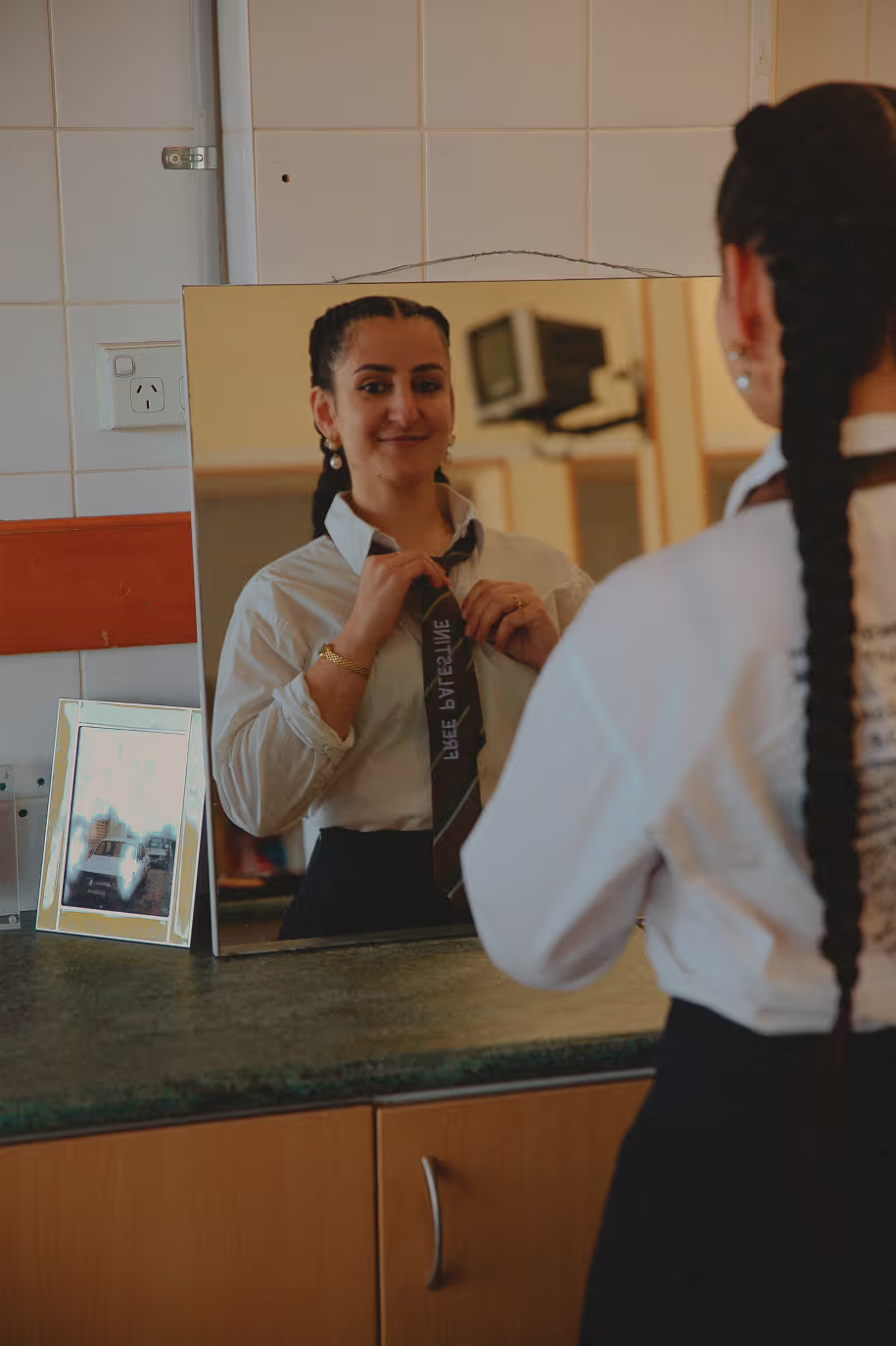
It’s like with the flashes. I know the most popular designs are the political ones. But I also don’t want to be getting paid for something that says Free Palestine. It feels very exploitative to be making money off of a genocide. I know if I was selling Free Palestine flashes, how popular it would be. So at the start, I was just doing them for free. And then I started offering them as a complimentary design with other flashes, so I was able to get paid for other designs while being able to offer something political.
I want people to be wearing that as embroidery and have that message out there, but I don’t want that to be my source of income, but I can’t do it for free – these things cost money. It takes a lot of back and forth to get to a place that feels like the best option for everyone.
For example, another design I have is ‘The colony will fall’. I was offering it as a complimentary design and then someone told me to make people pay it forward instead to a mutual aid. So I incorporated that instead.
B: That brings up a really interesting tension. It sounds like a daily check in with yourself to make sure that you’re using your creativity in a way that aligns with your values. Why do you continue to use your creativity for resistance? What do you see as the power of creativity in resistance?
S: I think I struggle with this question because it's all I've actually known. It wasn't really a conscious decision where I'm like, yeah, my work should be political or, you know, should have a statement.
I just think that when you make art, it should be there to tell a story. More than anything, that's what I want to do. To tell stories, but also to be able to do it in a language that people understand – through architectural language, through drawing style, through textiles.
I think you can try to drill an idea into someone's mind by telling them verbally or debating with them, but that may never really change their mind. But then sometimes, we see art and it changes us. Changes our opinion on things. So, I think it's like a silent way to make you feel something.
I remember my final studio at uni was a public exhibition. It was right after October 7th 2023, and the class was ‘Protest in Architecture’. We had put up
Matt Chun’s Land Back artwork which shows the Aboriginal flag and Palestinian flag. At some point during the exhibition, the Palestinian flag was covered and my name was ripped off the presentation board.
Being able to get a reaction, even if it’s a bad reaction, means you’re doing something. And I guess that’s my way of resisting.
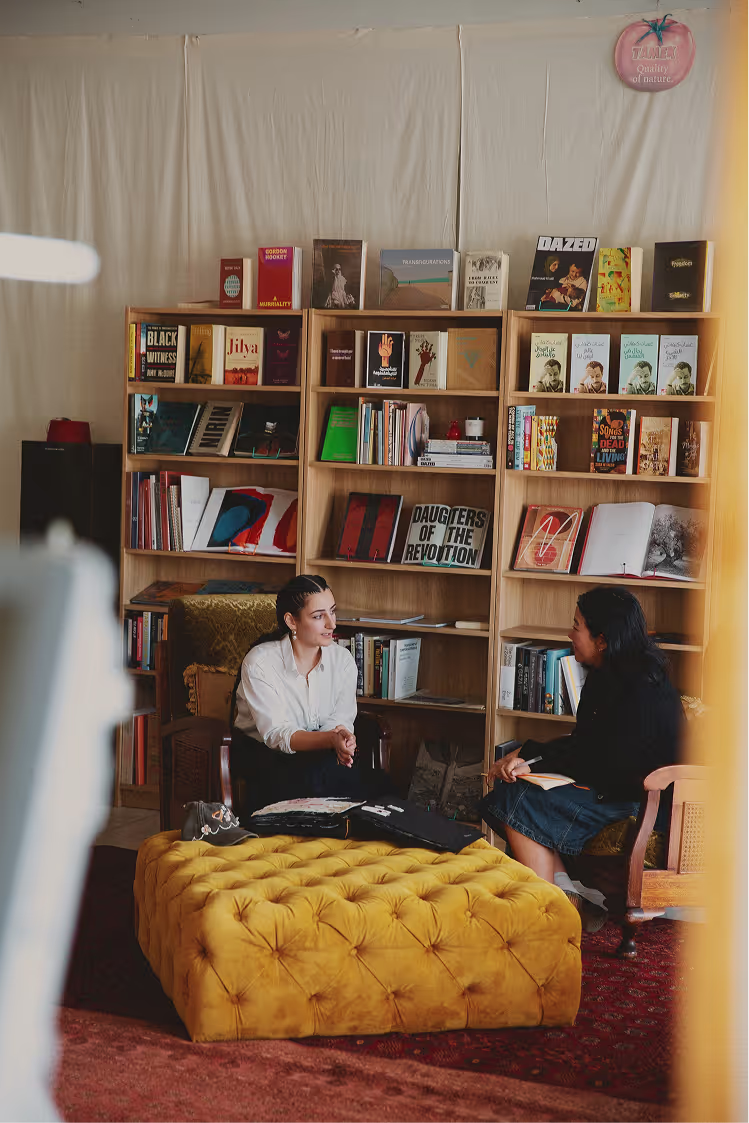
B: Another way you’re practicing resistance is this space itself that we’re sitting in. Can you tell us a bit more about Dukkana?
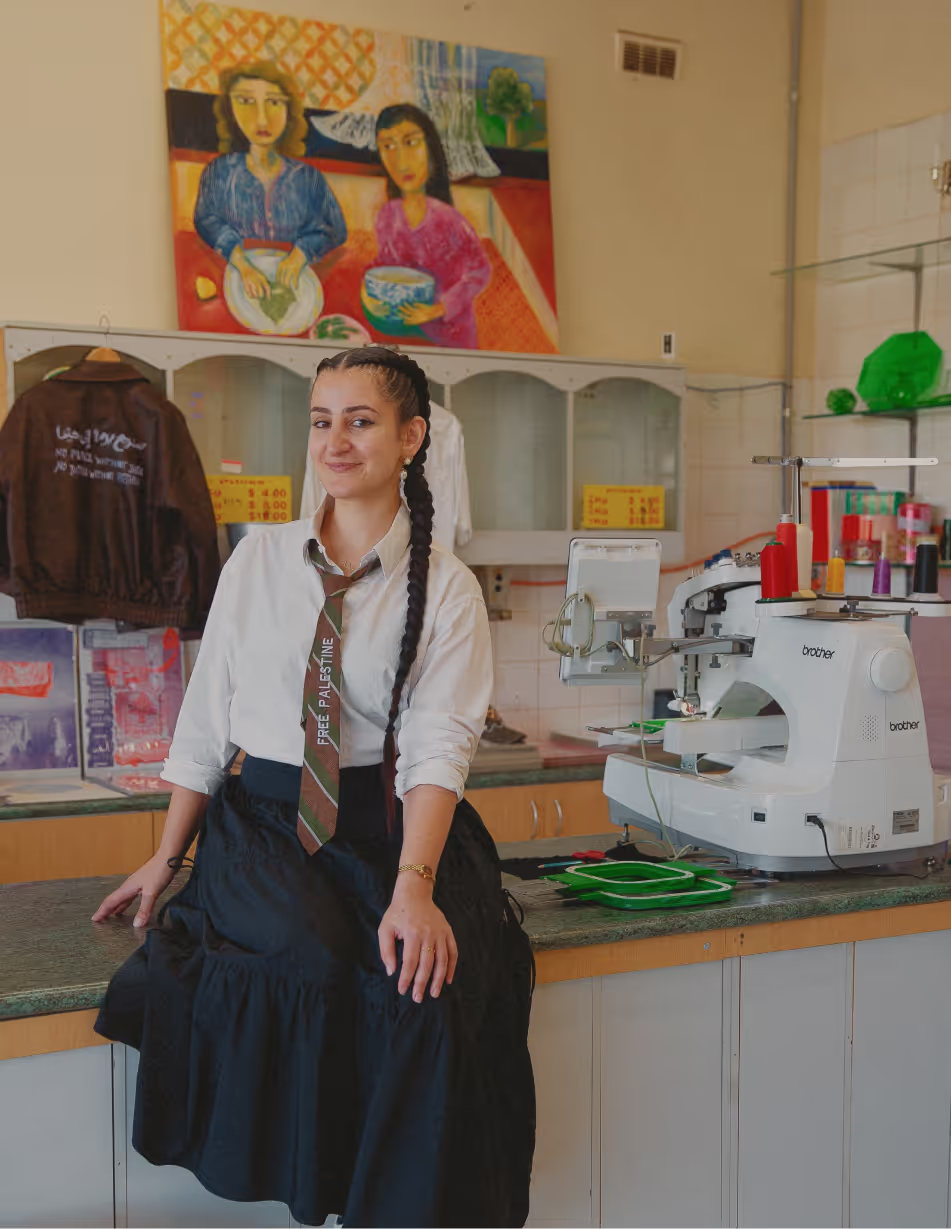
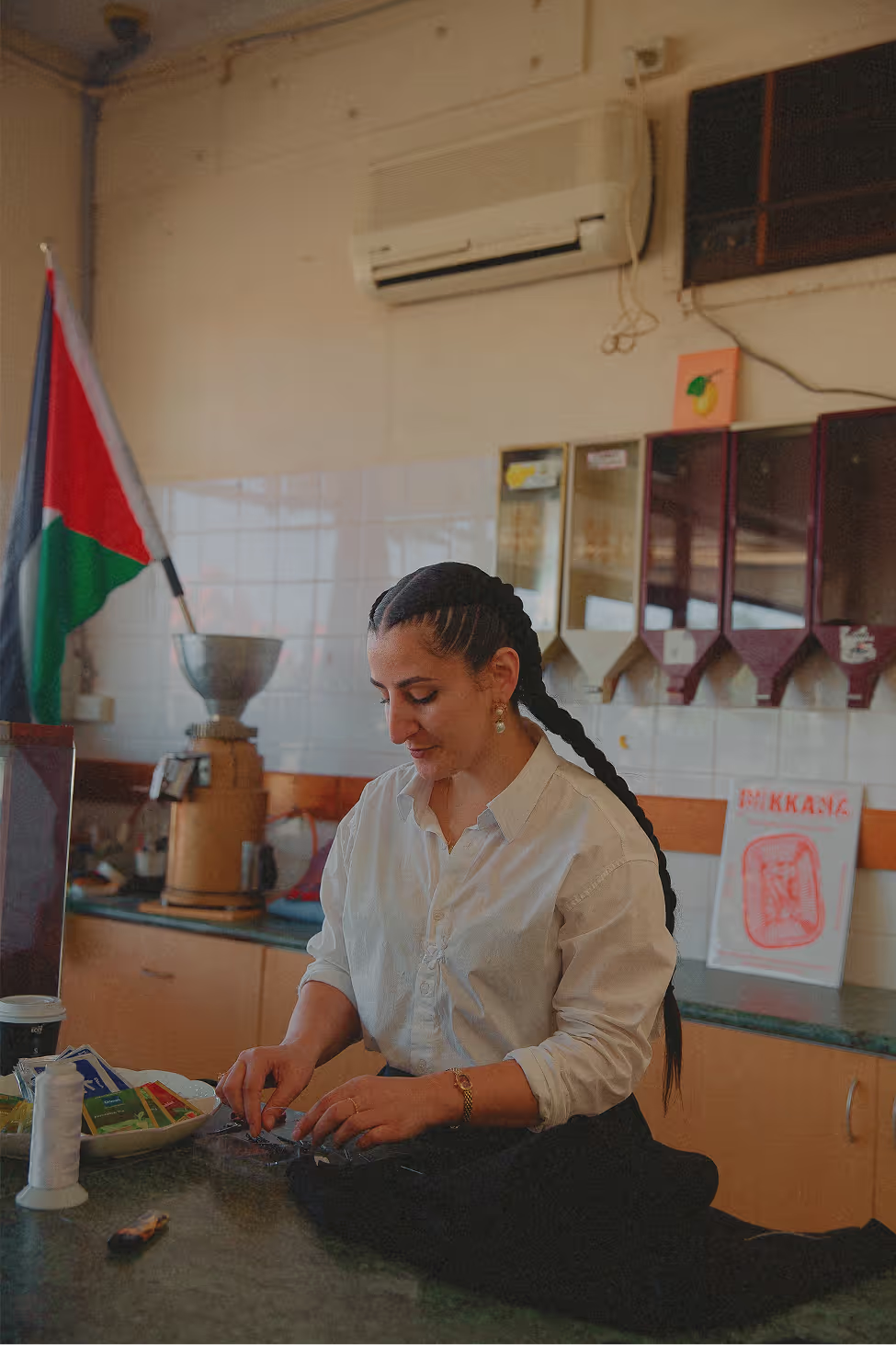
S: I have five siblings, and at some point, we’ve all worked here in the family business. I had a little stint for maybe two weeks over the school holidays and weaponised incompetency to be like “I can’t do this job”. My sister Emina worked behind the counter for a while. My dad, he’s always been a hard working person. But the business went downhill after Covid so the space was sitting vacant for a year. My sisters and I had to convince him to let us use it instead. Dukkana means, like, a bodega, or a corner store. We thought this was going to be a two-month pop up but we’re going on a year now.
I remember at the opening, getting kind of teary. I used to keep journals when I was younger and I have stories about this space, just dreading being here. I think back to that version of myself knowing what we’ve done here and how we would never have imagined all doing creative pursuits in this space all these years later. My 12-year-old self would not have been able to fathom that.
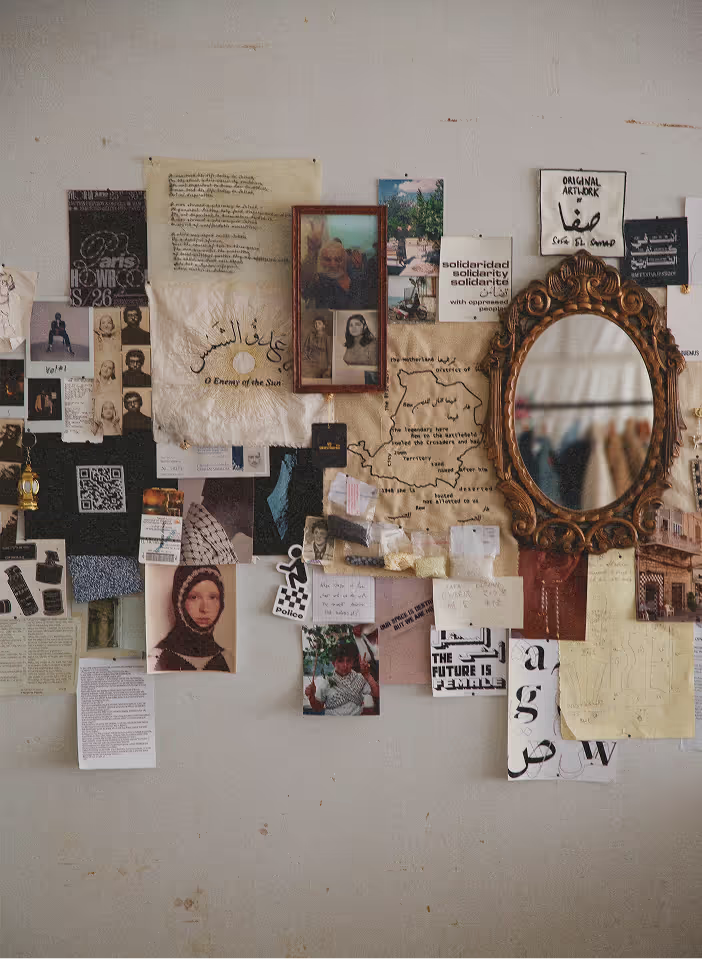
We wanted to stay true to what the space already is. In architecture, there’s a practice called adaptive reuse. And then in fashion, there’s upcycling or revitalisation of garments. It’s basically adapting to the space. The colours of our sign tie into the original logo. We kept as many things as we could that were still usable. That stand used to be for DVDs. For the longest time there was an incense holder cling wrapped to that column, just to freshen up the place. While we were gone, we had someone caretaking this space and they did an exhibition here, and they removed it. We were devastated, like, that was heritage listed! Then there’s this clock that is just stuck in time. It doesn’t work. I mean, we could change the batteries. But a lot of this space we tried to preserve.
My sister Fatima did her Masters in Urban Planning and is very interested in third spaces, so she really pushed for this. We have community events – poetry nights, movie nights, yoga classes. The space is so transformable and we charge $25 an hour for community events. Me and my sisters are usually here to facilitate anything.
We are open Thursdays to Saturdays. People can come in, work from home, read a book – some of the books here are over 100 years old and limited edition prints. We want people to be able to access them. We’ve been blessed to have this space, so it’s just being able to give back to the community.
B: Do you think of this space as a form of resistance?
S: Yes. I just think that when everything is based on, like, capital – if you want to go somewhere to work or sit, you have to buy a coffee at least – the fact that this space is free and accessible feels like resistance.
B: You’ve described Dukkana as a third space for South West Asia and North Africa (SWANA) artists. Why do you think it’s important that these types of spaces exist?
When we first opened, it was definitely intended to be for SWANA artists. For everyone, but particularly for SWANA artists, to experiment in the space. But then we realised there’s so many other people who have a need for this space that aren’t SWANA. So it’s kind of extended more to BIPOC.
We used to have this artwork up on the wall. It was taken down for an exhibition but we have to put it back up.The quote was by Chelsea Kwayke: “As a minority in a predominantly white space, to take up space is itself an act of resistance.” A lot of spaces are just not made for us. So this is somewhere that everyone can feel welcome and not feel like a minority either. To not feel like they’re doing something wrong. To just feel at home.